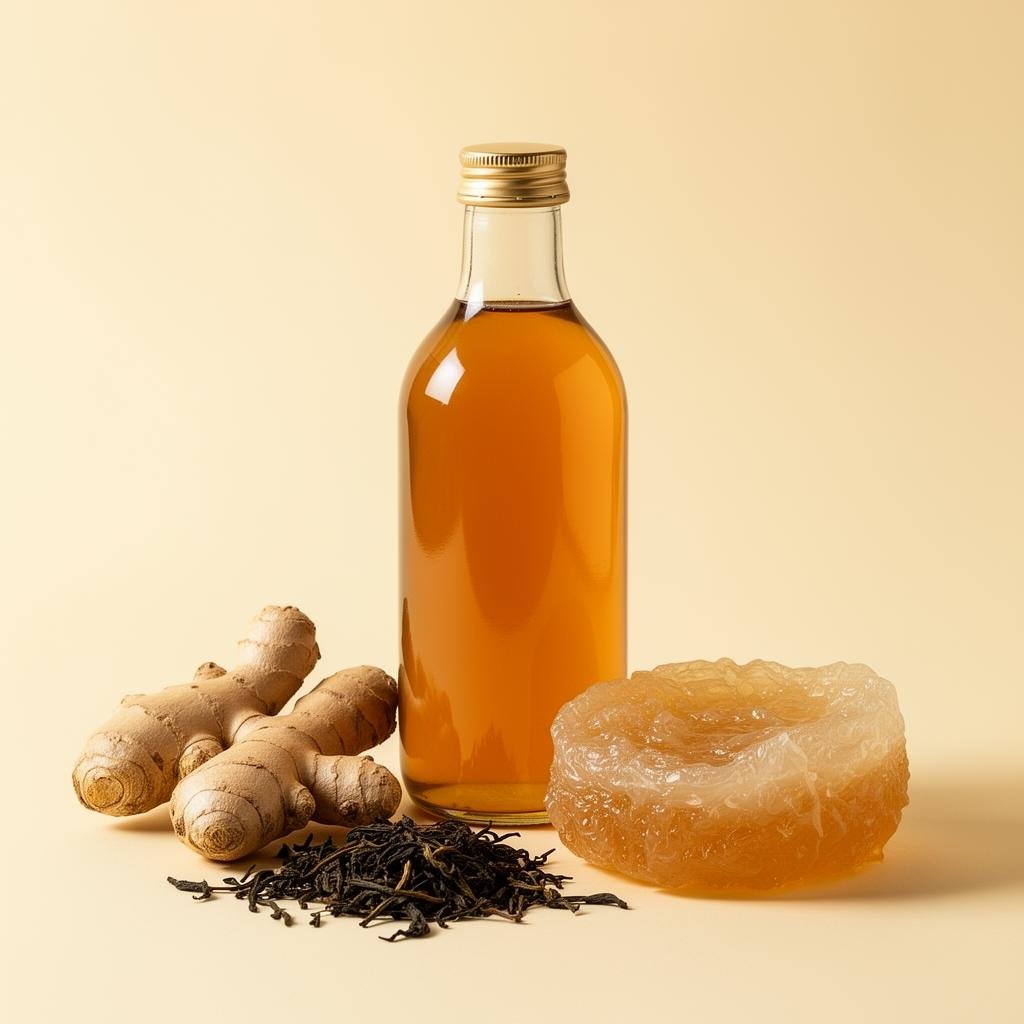
Fermented drinks like kombucha, ginger beer, water kefir and kvass are made by introducing live cultures to a sweetened base of tea, juice or water. Over time, these cultures convert sugars into organic acids and natural carbonation, creating a tangy, lightly fizzy drink with a distinctive depth of flavour.
Tap any card to see how each ingredient shapes the flavour and character of the final drink.
Each fermented drink uses a different base and culture, and that's what gives each its own unique flavour. Tap a drink to explore what goes into it.
Kombucha is made by fermenting sweetened tea with a SCOBY. Over one to two weeks the cultures convert most of the sugar into organ acids and natural carbonation, producing a refreshing, slightly tart drink often finished with fruit or herbs.
Traditional ginger beer is brewed from grated ginger, sugar and water using a ginger bug starter. Fermentation builds gentle carbonation and a punchy, peppery flavour. Modern versions range from lightly fermented to fully carbonated soft drinks.
Water kefir is made by fermenting sugar water with translucent kefir grains. It ferments quickly, usually within 24 to 48 hours, producing a delicate, lightly fizzy drink that is often flavoured with fruit, citrus or herbs during a second ferment.
Kvass is a traditional Slavic drink fermented from stale rye bread or beetroot. The wild fermentation gives it a deep, earthy character somewhere between a soft drink and a light beer, with very low alcohol and a distinctive tang.
Regulation
How are fermented drinks regulated?
Fermented drinks are regulated under the Food Standards Code as conventional foods. These beverages must meet general food safety requirements with accurate nutrition panels and ingredient lists, and any added ingredients must be in compliance with the Code.
Kombucha and other fermented beverages must also stay within alcohol limits to be classified as non-alcoholic. Health and nutrition claims must be scientifically substantiated, ensuring you get what's promised on the label.
Did you know?
Kombucha is thought to have originated in China over 2,000 years ago, where it was traditionally consumed for its believed detoxifying and energising qualities.
Did you know?
In the 1960s, Swiss researchers drew a comparison between kombucha and yogurt, noting that both contained beneficial live cultures. This helped spark a renewed wave of interest in the drink.